
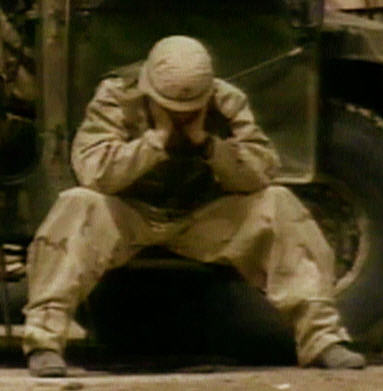
 War is horrific. Those who choose to fight for the freedoms we share risk not only loosing their lives or suffering bodily harm, they face emotional turmoil of having their friends shot in front of them and dealing with the emotional scars that living in wartime condition create. In honor of the veterans who have served our country, I thought I would show how PTSD has been viewed throughout American history.
Revolutionary War: In the 1700s, PTSD was called nostalgia. A French surgeon described it as having three stages: 1) “heightened excitement and imagination,” 2) “period of fever and prominent gastrointestinal symptoms,” and 3) “frustration and depression” (Bentley, 2005). Not much was written about the effects of the war on soldiers. But they had to have suffered emotionally. These men fought for the freedom of their country in conditions where they didn’t have the resources needed to keep them warm, dry, and fed. Many died from starvation and exposure. Yet after the war, when they returned to civilian life, they were forgotten. The new nation couldn’t even afford to pay them.
War of 1812: Again, not much was known about PTSD during this time, but the White House burning to the ground and British soldiers marching into America had to affect these soldiers.
 Civil War: The Civil War is when the condition of PTSD first started to be recognized as Soldier’s Heart. Many soldiers returning from battle after the war suffered the effects of soldier’s heart.
In my novella, Soldier’s Heart, a young soldier deals with flashbacks and conflicting emotions when he returns home to his wife and farm. You can buy a digital copy from Amazon or Barnes and Noble.
World War I: In World War I, PTSD was called Shell Shock. Life in the muddy trenches caused desperation and emotional turmoil. Many soldiers suffering from shell shock were executed for cowardice instead of treated for an emotional condition. Others were institutionalized as insane and were taught skills like basket weaving to support themselves. After the war, many soldiers suffering from this were encouraged to keep it hidden because of the attitude toward it.
World War II: In World War II, Battle Fatigue was a recognized condition by psychiatrist. Over a million men who suffered from it during the war were pulled away from duty for treatment and rest. The attitudes toward it were still not favorable, and those suffering from the condition were considered weak. In one account, General Patton slapped a man suffering from battle fatigue and called him a coward.
Korea and Vietnam: The Diagnostic and Statistical Manual I (DSM-I) by the American Psychiatric Association (APA) in 1952 included a diagnosis for “gross stress reaction,” which was thought to be related specifically to combat-related trauma. However, “Gross Stress Reaction” was dropped from the DSM-II in 1968, for reasons that remain unknown (Andreasen, 2004). Soldiers from Vietnam were treated for Gross Stress Reaction, but their systems became worse when they returned home and were disdained for their service. Vietnam vets with PTSD were diagnosed as having Vietnam Combat Reaction, a severe form of PTSD.
Dessert Storm and the War on Terror: PTSD, Post Tramatic Stress Disorder is understood better now than it used to be, not only by mental health personnel who treat the disorder, but by the public. Soldiers go through a lot and need to be supported through the physical and emotional damage combat causes.


Leave a Reply